Both swim spas and traditional pools can create a valuable aquatic space, but they solve different project requirements. The better choice depends on available land, intended use, local climate, installation constraints and the type of swimming experience the user expects.
| Consideration | Swim spa | Traditional pool |
|---|---|---|
| Footprint | Compact, self-contained unit | Usually requires a larger dedicated area |
| Swimming | Continuous swimming against an adjustable current | Length-based swimming and wider free movement |
| Hydrotherapy | Often integrated into the same unit | Usually requires a separate spa or dedicated features |
| Installation | Delivered as a manufactured unit with site connections | Built or assembled on site with a broader construction scope |
| Temperature | Smaller water volume can support targeted heating strategies | Larger water volume and surface area affect heating decisions |
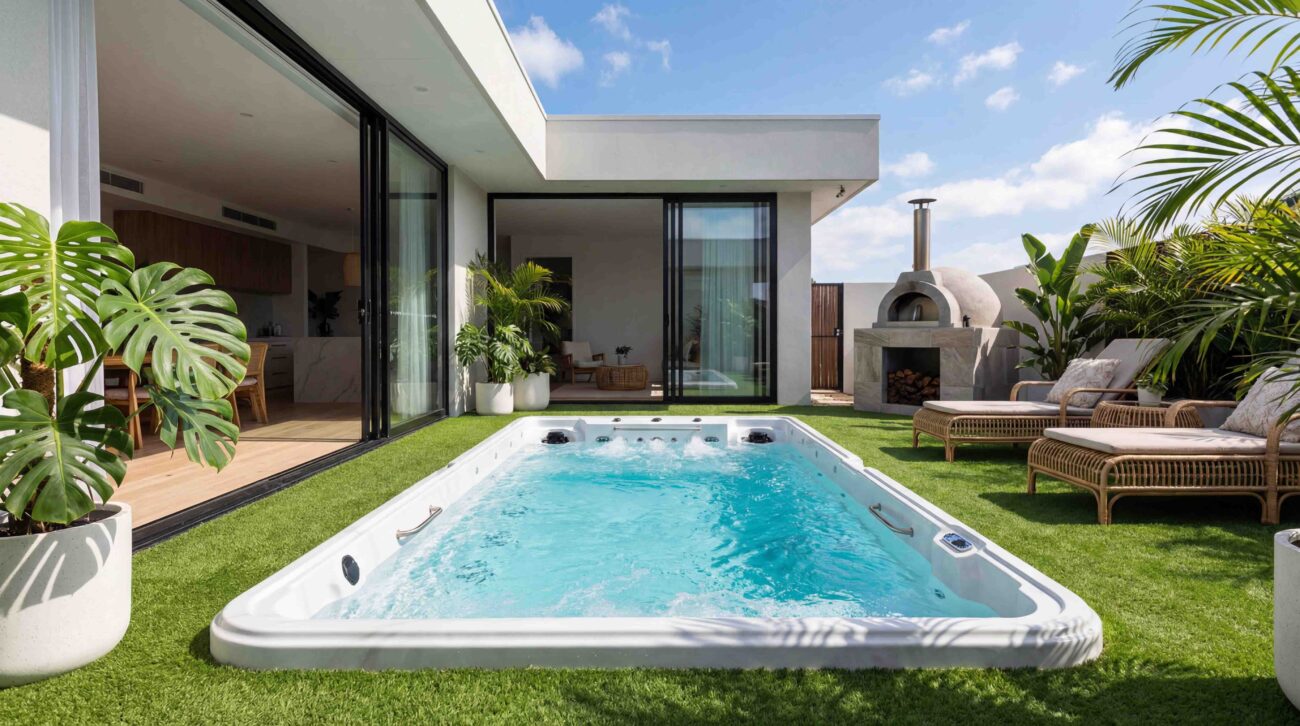
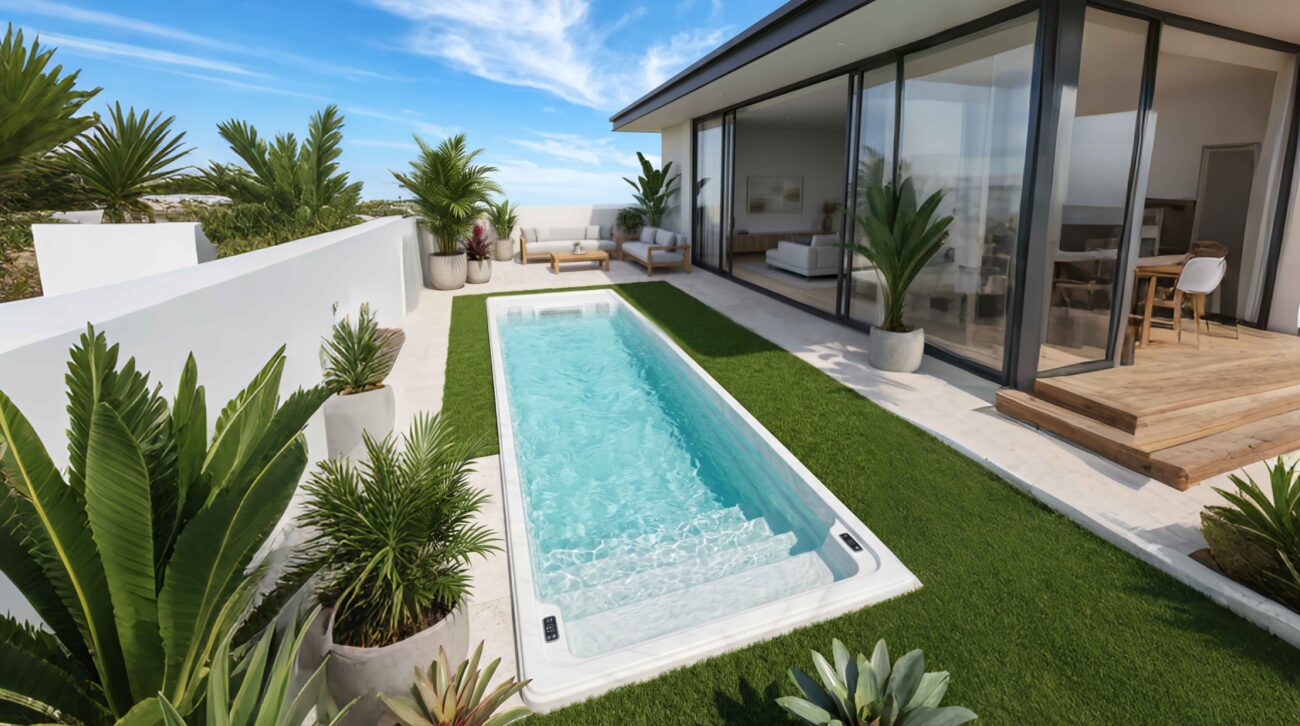
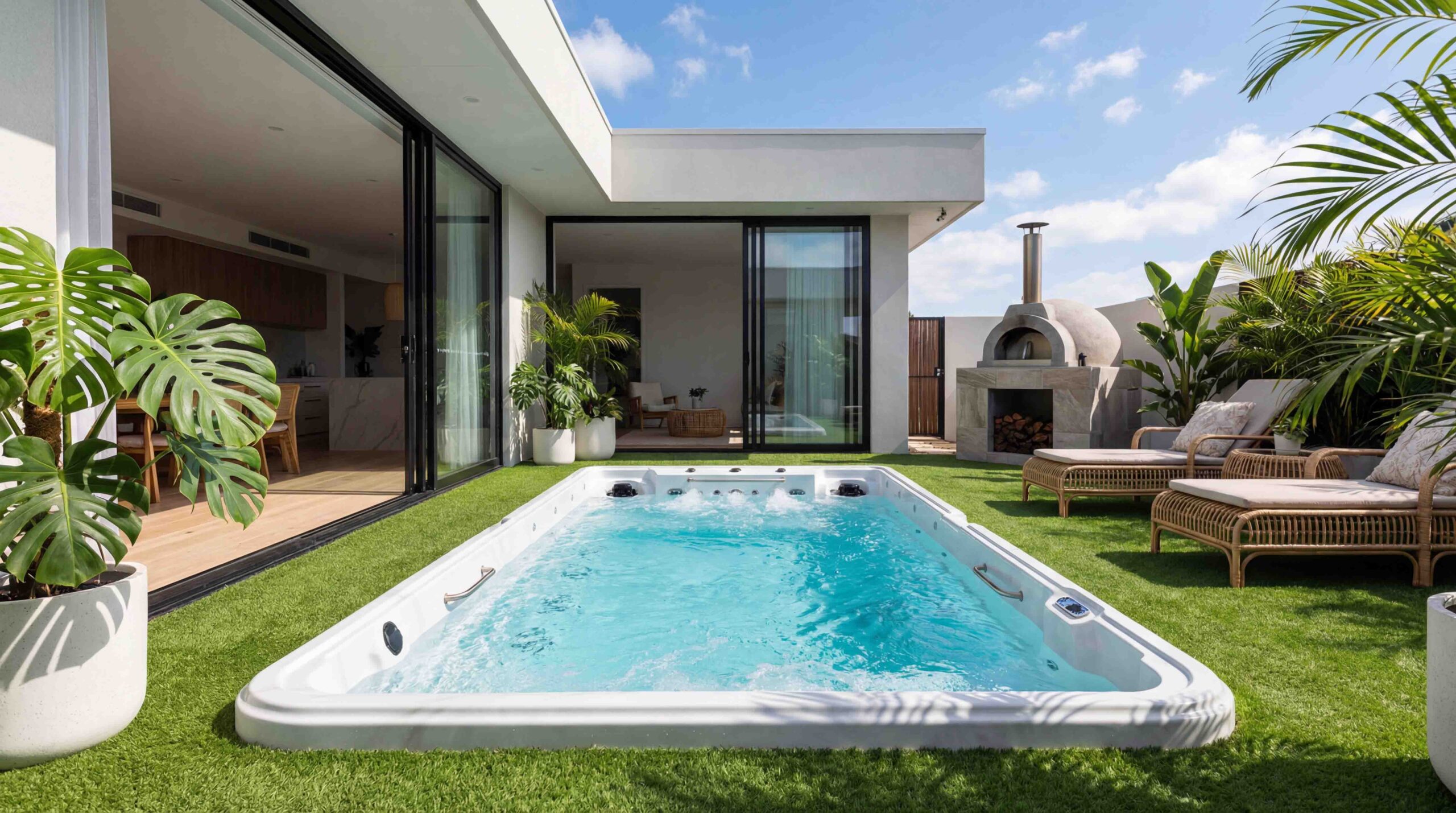
A swim spa is often considered where the available area cannot comfortably accommodate a full-length pool. It can be installed above ground, partially recessed or integrated into a deck when the structure, drainage and service access are properly planned. A traditional pool provides more open water and can be shaped around the landscape, but it normally involves more extensive excavation, construction and finishing work.
Neither option should be selected from dimensions alone. Confirm access for construction or delivery, the filled structural load, equipment placement, electrical supply, water management and local planning requirements.
A traditional pool allows swimmers to travel from one end to the other. It is well suited to recreation, lessons and activities that need open water. A swim spa keeps the swimmer in one position against a generated current. This supports continuous exercise without turns and can make structured workouts practical in a shorter space.
The quality of the current matters. Compare adjustability, flow width and the way the water reaches the swimmer. People who mainly want relaxed play or a large social area may prefer a pool, while users who value repeatable resistance training may prefer a swim spa.
Many swim spas combine an exercise zone with hydrotherapy seating. Some projects use separate temperature zones, while others use a single body of water. Review the actual layout rather than assuming every model provides the same balance. A conventional pool can also include benches, jets and heating, but these are project-specific design decisions rather than a standard configuration.
A manufactured swim spa can reduce some on-site construction, but it still needs a suitable base, safe access, professional electrical work and a realistic delivery plan. A traditional pool requires coordinated civil, hydraulic and finishing work. Timelines for both options depend on the site, local approvals and contractor availability.
Water testing, filtration, cleaning and cover care apply to both. The amount of water, exposed surface area, local weather and frequency of use influence the maintenance routine. Compare the complete operating plan rather than relying on a single energy or maintenance estimate.
A swim spa is often a strong fit for compact sites, year-round exercise, adjustable resistance and combined wellness use. A traditional pool is often a better fit when the project prioritises open-water recreation, multiple swimmers moving freely or a fully customised landscape feature.
For a commercial or residential project, document the required activities, available footprint, delivery route and local technical conditions first. Then compare suitable models against the same checklist. Visit our product range or send us your project details for a more focused discussion.
No account yet?
Create an Account